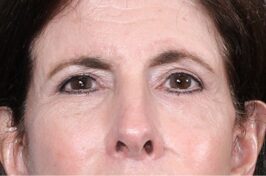
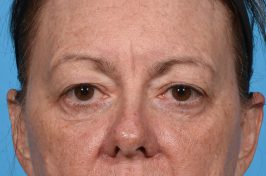
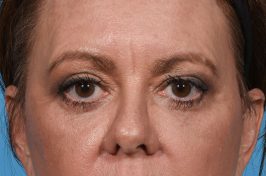
Despite feeling well-rested and healthy, younger and older patients alike struggle with looking perpetually fatigued or stressed. In many cases, this is caused by reduced support in the upper and lower eyelids occurring over time with declining collagen and elastin production. The effects of the natural aging process combined with sun exposure and the delicate anatomy of the eye’s supportive tissues often lead patients to seek out blepharoplasty — a cosmetic procedure designed to smooth the eyelid contours. Blepharoplasty, commonly referred to as an eyelid lift or eyelid surgery, can refresh the upper and lower lids to alleviate a sleepy or aged appearance. This is accomplished by treating excess skin, protruding fat, and lax musculature in the region surrounding the eyes. Dr. Ira Savetsky, a renowned board-certified plastic surgeon in New York City, performs blepharoplasty to brighten your appearance and emphasize the natural character and beauty of your face.
- Eyelid Surgery Benefits
- Eyelid Surgery Candidates
- Eyelid Surgery and Wrinkles
- Types of Eyelid Surgery
- Eyelid Surgery Procedure
- Eyelid Surgery Recovery
- Eyelid Surgery Results
- Eyelid Surgery Scars
- Eyelid Surgery Cost
- Complements to Eyelid Surgery
- Blepharoplasty FAQs
What Can Blepharoplasty Improve?
Eyelid surgery can treat the upper eyelids, lower eyelids, or both regions depending on the extent of your concerns. As signs of aging in the upper face become more noticeable, loose skin nestled around the eyes can inadvertently convey emotions like anger, fatigue, and unhappiness. Blepharoplasty can be very effective for patients who feel their eyes look more aged, exhausted, or stressed than they may feel.
In general, this facial plastic surgery can:
- Correct eyelid “hooding,” a condition in which excess skin and tissue droop into a patient’s line of sight
- Smooth the eyelid contours to look more youthful
- Brighten the eyes and achieve a more lively, alert appearance
- Reduce fine lines and wrinkles around the eyes, such as crow’s feet
Blepharoplasty can refresh the eyelids with beautiful results, but the procedure is not designed to treat sagging skin in the brow or forehead. Those who would like to improve drooping brows and/or frown lines may consider undergoing brow lift surgery instead, or combining their blepharoplasty with a brow lift for more inclusive rejuvenation.
Is Eyelid Surgery Right for Me?
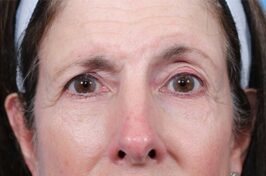
Blepharoplasty is one of the most popular cosmetic surgeries performed today. If you believe your appearance doesn’t align with how you feel on the inside, eyelid surgery is one option to achieve upper facial rejuvenation. “Hooding,” a phenomenon caused by the upper eyelids drooping into a patient’s line of sight, can be a very telling indication that you may benefit from eyelid surgery, as well as:
- Puffy upper and/or lower eyelids
- Excess eyelid skin and drooping tissue
- Bags or dark circles underneath the lower eyelids
Good candidates for eyelid surgery are in good health and have no unmanaged medical conditions that may interfere with the healing process. Dr. Savetsky can confirm whether blepharoplasty is the best procedure to achieve your goals during a consultation, where he will be able to develop a treatment plan tailored to address your concerns. A facelift and neck lift is often performed with blepharoplasty to comprehensively rejuvenate the upper and lower face, depending on each person’s goals.
Can Eyelid Surgery Improve Wrinkles?
While blepharoplasty is primarily performed to improve the eyelids, many patients inadvertently experience reduced wrinkling after the procedure as well — particularly with fine lines near the lower eyelids. By addressing loose, sagging skin and puffiness in the eyelids, blepharoplasty can enhance the appearance of crow’s feet and other forms of wrinkling in the upper face. That said, patients who are mainly concerned with smoothing frown lines and creases along the forehead may better achieve their goals with a brow lift. Brow lift surgery can be performed alone or at the same time as eyelid surgery, if desired. Simply discuss your concerns and goals in a consultation with Dr. Savetsky so he can help formulate the right treatment plan for you.
Wrinkles can also be softened with non-surgical BOTOX® Cosmetic injections if desired. This provides an option to specifically target frown lines, crow’s feet, brow creases, and other dynamic wrinkles commonly caused by overactive facial muscles. Depending on the specific details of your treatment, injections can usually be pursued once the healing process after blepharoplasty is complete.
Types of Eyelid Surgery
Eyelid surgery can enhance the upper eyelids, lower eyelids, or both regions. Depending on the severity and location of a patient’s concerns, treatment to the upper and lower eyelids can generally provide the highest caliber of rejuvenation.
Upper Blepharoplasty
Upper eyelid surgery is meant to reduce excess skin disrupting the eyelid contours. Loose skin in the upper lids can cause both cosmetic and functional issues — not only can this skin inelasticity lead to puffiness and wrinkles, but “hooding” can also be a concern. Upper eyelid hooding occurs when sagging tissue starts to interfere with your line of vision, sometimes accumulating on the upper lashes and drooping into your field of vision. The upper blepharoplasty procedure can remove excess skin in this area, thereby treating eyelid hooding and smoothing this contour.
Lower Blepharoplasty
With lower eyelid surgery, the procedure is performed to reduce/reposition excess skin and fatty deposits underneath the lids causing puffiness, under-eye bags, and wrinkles. This can smooth the lower eyelids, as well as reduce dark circles and eye bags causing a fatigued look. The incision is typically made internally or along the lower lash line, allowing little to no visible scarring.
Dr. Savetsky also incorporates nano fat grafting into the lower blepharoplasty procedure, which has been an increasingly valuable adjunct to an eyelid lift for patients who have hollowing in the tear troughs, thin skin, or early volume loss beneath the eyes. Nano fat contains regenerative cells and growth factors, but no intact fat cells. As a result, nano fat can be injected superficially and safely into the delicate lower eyelid and tear trough region, where standard fat may be too bulky or unpredictable. In addition, nano fat does not behave like a traditional filler and results evolve gradually over several weeks as the skin regenerates and remodels, leading to more natural and subtle enhancement.
After excess fat is removed or repositioned and loose skin is addressed, nano fat is carefully injected into areas of crepey skin, fine lines, or subtle hollowness. Thanks to its regenerative properties, nano fat helps stimulate collagen production, improve elasticity, and enhance skin thickness over time, leading to a smoother and healthier-looking under-eye area. In this way, nano fat can be used during lower eyelid surgery to improve skin quality rather than simply adding volume.
Quad Blepharoplasty
Upper and lower blepharoplasty combined can rejuvenate the eyes by addressing both the upper and lower eyelids in a single procedure. With age, the eyelid skin tends to stretch and weaken while fat deposits accumulate or shift, leading to a tired, heavy, or puffy appearance. In the upper eyelids, excess skin and lax muscle can create drooping that not only affects appearance but, in some cases, vision. In their lower eyelids, patients often notice puffiness, under-eye bags, and fine wrinkling that contribute to an aged or fatigued look. By treating all four eyelids simultaneously, quad blepharoplasty provides a more comprehensive enhancement of the eyes, creating balance and harmony in the upper face.
Asian and Ethnic Blepharoplasty
Asian or ethnic blepharoplasty, commonly known as “double eyelid surgery,” is a specialized technique that creates or enhances a natural crease in the upper eyelid. Some individuals of Asian descent do not have a visible upper eyelid crease, which can make the eyes appear less defined. Although not all Asian patients have a need or desire for an upper eyelid crease, this variation of blepharoplasty is offered to create a distinct and natural-looking fold that opens up the eye area while preserving one’s unique ethnic identity. Unlike traditional blepharoplasty, which is primarily focused on reversing signs of aging, this procedure can be performed for those who want a permanent eyelid crease without the need for tape, glue, or at-home remedies.
How is the Blepharoplasty Procedure Performed?
Whether patients opt to treat the upper eyelids, lower eyelids, or both, the blepharoplasty procedure is typically performed in an outpatient setting under local or general anesthesia. Upper eyelid surgery is designed to smooth skin laxity along the eye contour, which can accumulate along the lash line and potentially obstruct one’s field of vision.
A lower eyelid lift, on the other hand, can address puffy or droopy under-eye bags by removing bulging fat while tightening the skin of the lower eyelids. Dr. Savetsky helps ensure a natural-looking outcome by targeting the fat in the deeper facial planes rather than the superficial fat, allowing him to avoid an artificial or overdone look. He also complements blepharoplasty techniques with fractionated facial fat transfer to soften the junction between the lower lid and cheek (tear trough). The entire procedure usually takes approximately two hours and sutures are removed after five to seven days. Patients can also return to their normal daily routines, barring strenuous exercise, at this time.
What Can I Expect During the Eyelid Surgery Recovery Period?
After eyelid surgery, swelling and bruising around the eyes are to be expected. Patients usually feel well enough to perform light activity after a couple of days while most people return to non-strenuous work within one to two weeks. You will have thorough aftercare instructions detailing how to facilitate a smooth recovery period, such as keeping the head elevated above the chest and taking good care of your incisions. Most swelling should subside within one to two months, although residual inflammation may still be present for as long as six months.
How Long Do Eyelid Surgery Results Last?
The outcome of blepharoplasty is designed to be long-lasting and natural, often providing improvement for 10 – 15 years and beyond. Nothing will completely stop facial aging, but treatment options like eyelid surgery can slow down the aging process as well as help individuals age more gracefully. While the natural aging process will continue, those who received eyelid surgery should always look younger and more refreshed than individuals who did not undergo the procedure.
There are many measures that can maximize the longevity of blepharoplasty results, including protection from sun exposure, healthy living, and preventative maintenance. In order to prolong the integrity of your results, our team recommends:
- Always wearing sun protection, such as a high-SPF sunscreen, sunglasses, hats, etc.
- Living an active lifestyle including a healthy diet rich in antioxidants
- Using high-quality skincare products
- Undergoing periodic non-surgical treatments, such as microneedling, facials, and peels
Will I Have Noticeable Blepharoplasty Scars?
Dr. Savetsky meticulously places incisions within the natural folds and contours of the eyelids, allowing inconspicuous, if not undetectable, post-surgical scarring. Upper blepharoplasty typically requires an incision along the natural crease of the upper lid, while lower blepharoplasty is usually performed via an incision made along the lower lash line. This discretion typically allows scars from eyelid surgery to blend in with areas of natural anatomic transition. Please feel free to explore our before-and-after photos to get an idea of what you can expect from the outcome of blepharoplasty.
While eyelid surgery scars are relatively discreet, patients can help improve their post-surgical scars with lightening creams, medical-grade skincare products, and sun protection. If you’re concerned about scarring, don’t hesitate to reach out to our New York City office to speak with a member of our team or to book an appointment with Dr. Savetsky.
How Much Does Blepharoplasty Cost?
Eyelid surgery costs vary according to your geographic location and the experience of your plastic surgeon. In New York City, the cost of blepharoplasty ranges from $5,000 to $20,000 depending on the specific details of your treatment plan. While this offers a general approximation, your actual cost estimate will be assessed according to:
- The type of eyelid surgery procedure performed
- The surgical technique(s) utilized
- The extent of your concerns
You will receive a personalized quote after your consultation and our office will speak with you about payment and financing options. Our practice works with leading healthcare lending company CareCredit®, which provides low- to no-interest payment plans for qualified patients who are considering elective treatments and procedures.
Complements to Eyelid Surgery
Upper and/or lower blepharoplasty can make you look brighter and more refreshed, but many individuals in NYC have additional areas of concern they’re eager to address at the same time as eyelid surgery. Complementary treatments depend on the nature of your aesthetic goals, but potential surgical plans may include the addition of:
- Brow Lift: In some patients, sagging brows can create the illusion of excess eyelid skin, making the eyes appear heavy or “hooded.” While upper blepharoplasty removes redundant skin and tissue, a brow lift can address the root cause of drooping by repositioning the brows to a more youthful and rejuvenated positioning.
- Facelift: A facelift can be performed in tandem with blepharoplasty to extend the rejuvenating effects of eyelid surgery to the lower two-thirds of the face. While blepharoplasty focuses specifically on the eyelid region, a facelift can treat sagging skin, deep creases, and jowling around the cheeks, jawline, and mouth. By lifting and tightening the underlying structures, a facelift can restore definition and achieve more youthful facial angles.
- Volume Augmentation: If you notice a lack of facial volume, fat transfer to the face or cheek fillers can replenish fullness and help sculpt more youthful contours in the mid-face. With age, volume loss in the cheeks can accentuate hollowness under the eyes and contribute to the appearance of under-eye bags or dark circles. By strategically adding volume to the mid-face, the transition between the lower eyelids and cheeks can be smoother and more youthful. During facial fat grafting, excess fat cells are repurposed and reintroduced into flat or sunken areas. Since this volume enhancement uses your own natural tissues, fat transfer often lasts longer than cosmetic fillers. Alternatively, cheek fillers from JUVÉDERM® or Restylane® can be utilized to refine the mid-facial contour non-surgically.
- Neck Lift: A neck lift can complement the results of eyelid surgery by rejuvenating the lower face and neck area, creating balance across the entire facial profile. Eyelid surgery refreshes the eyes and provides a more youthful look to the upper face, but if the neck and jawline exhibit significant sagging, muscle banding, or excess fat, the outcome can appear incomplete. When paired with blepharoplasty, a neck lift can ensure rejuvenation that’s consistent and harmonious.
Additional Blepharoplasty FAQs
When can I wear contacts after blepharoplasty?
Most patients are advised to wait approximately one to two weeks before wearing contact lenses after blepharoplasty, though the exact timing can vary based on the type of eyelid surgery performed (upper, lower, or both) and your unique rate of healing.
In the early recovery period, it’s normal and expected to experience swelling, tenderness, dryness, and increased sensitivity in the eyelids — all of which can make contact lenses uncomfortable or unsafe to wear before incisions are fully healed. Since inserting and removing contact lenses requires pulling on the eyelids, doing so too soon can place stress on healing incisions, increase irritation, and raise the risk of possible infection. For this reason, patients are usually cleared to resume wearing contacts between 7 and 14 days after surgery, provided healing is progressing well and there are no symptoms like dryness, redness, or foreign body sensation. Final clearance should always come from Dr. Savetsky during a post-operative follow-up visit, as timelines for healing can vary from person to person.
At what point after eyelid surgery can I wear glasses again?
In most cases, patients may wear glasses soon after their blepharoplasty, often even on the day of surgery. Glasses do not require touching or pulling the eyelids, typically making them safe for use during the early healing period. Dr. Savetsky will give you specific instructions when he monitors your recovery in person.
Patients should ensure their frames are lightweight and do not rest heavily on swollen areas, particularly after upper eyelid surgery. Sunglasses are especially beneficial when outdoors, as they provide additional protection from UV exposure and can reduce eye strain. Once swelling resolves and incisions have healed, typically within one to two weeks, patients can resume wearing any style of glasses without restriction.
Will eyelid surgery get rid of dark circles?
Blepharoplasty can generally improve the appearance of dark circles underneath the eyes by repositioning herniated fat in the lower eyelids, which tends to create the appearance of shadows and can exacerbate a tired or fatigued look. By smoothing this under-eye region and diminishing these shadows, patients generally appear brighter-eyed and more rested. However, Dr. Savetsky will need to evaluate your concerns to assess whether lower eyelid surgery will give you the results you envision.
In some cases, the area can be further enhanced through meticulous volume enhancement in the junction between the tear troughs and the upper cheeks. Depending on the method preferred and your hopes for the outcome, this can be accomplished through facial fat transfer or non-surgically with dermal fillers. Fat grafting requires surgery but provides more natural, long-lasting results, while subtle additions of volume through JUVÉDERM®, Restylane®, and Sculptra Aesthetic® fillers can be completed non-surgically — yet only offers temporary rejuvenation. Our aesthetic team can explain your treatment options and help you determine the best approach to lighten and address your dark under-eye circles.
Eyelid surgery is one of the most frequently performed and effective procedures to maintain an energetic and youthful look in the upper face. If you’d like to learn more about treatment, contact Dr. Ira Savetsky to discuss your concerns and goals in a private consultation.